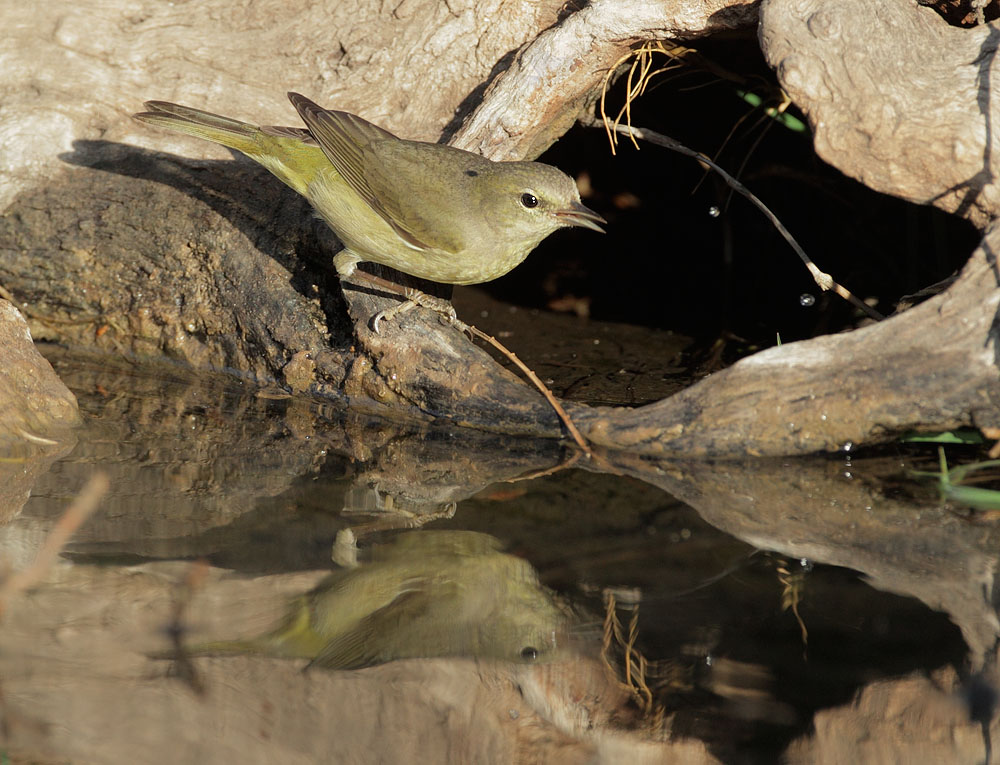
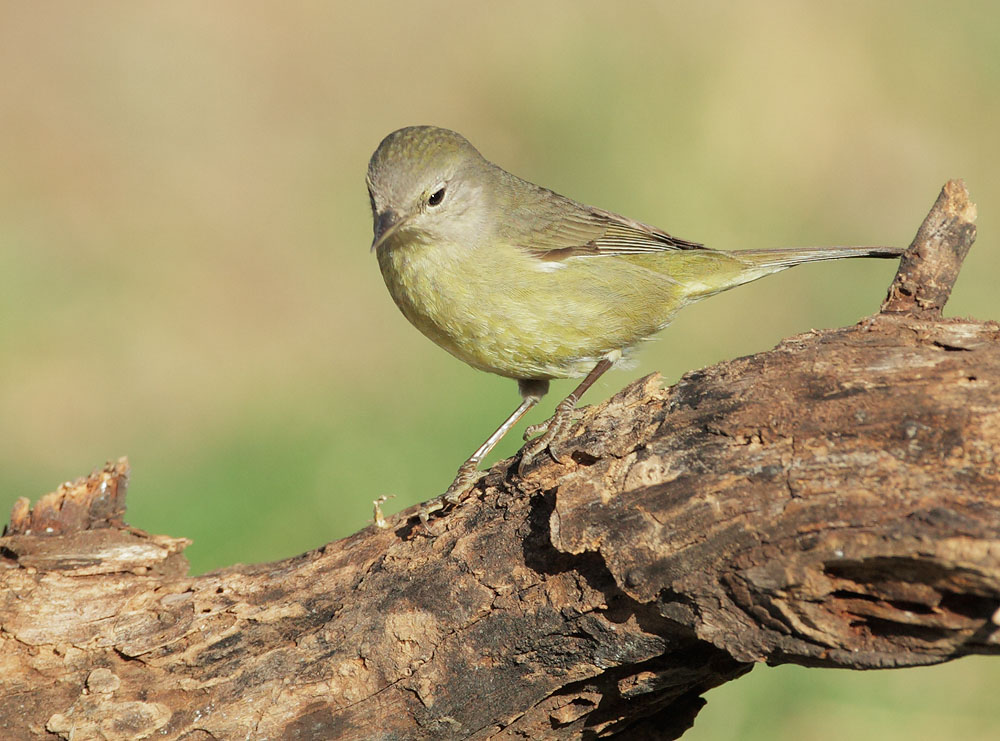
Orange-crowned
Warbler,
Oreothlyps celata
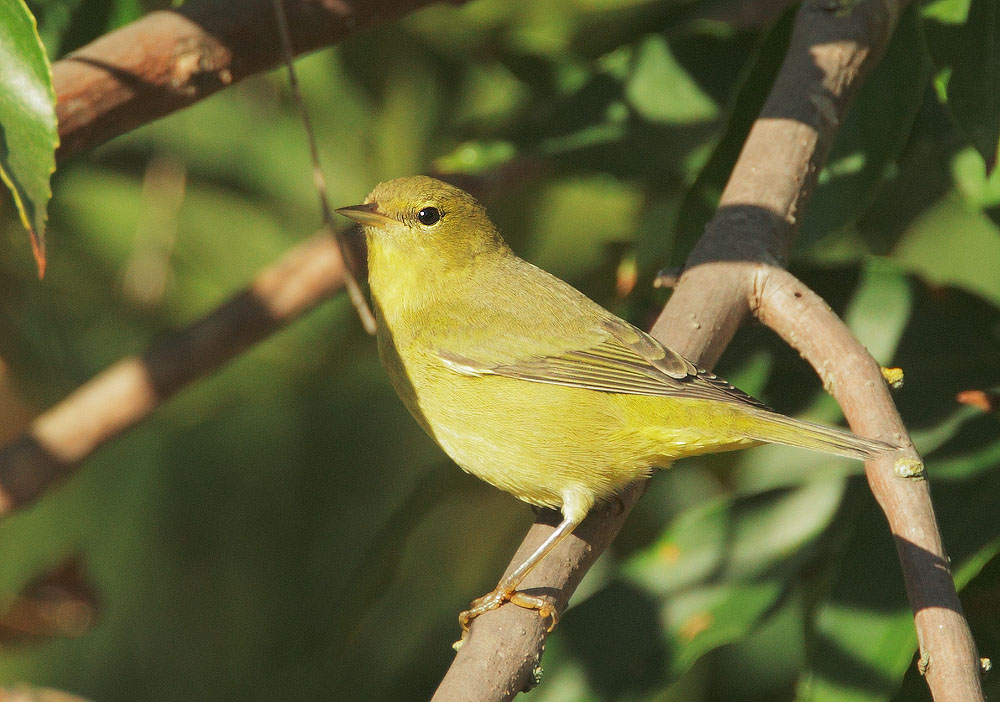
The picture above and the two below show bright males of the Pacific Coast subspecies lutescens. The (often faint) dark eye-line through a broken eye-ring is a good mark to distinguish this species from dull Yellow and Wilson's Warblers, which can be similar in color to Orange-crowned.
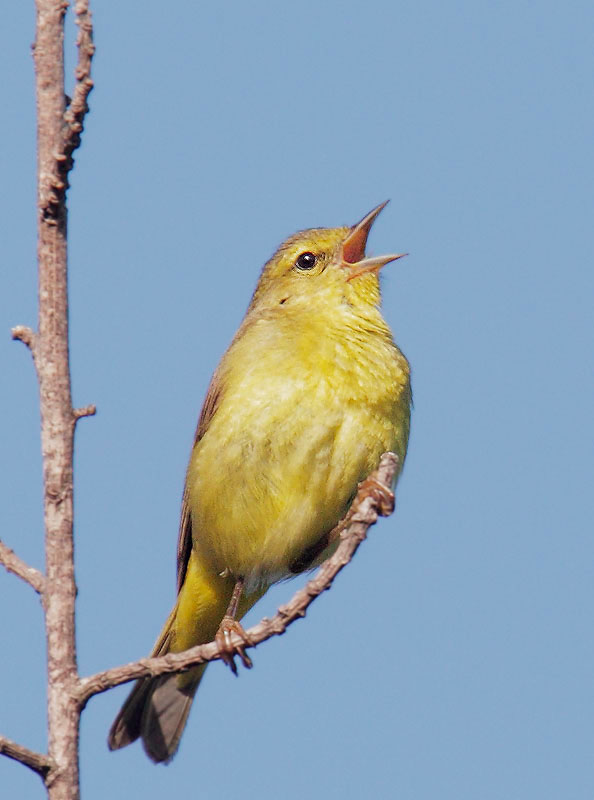
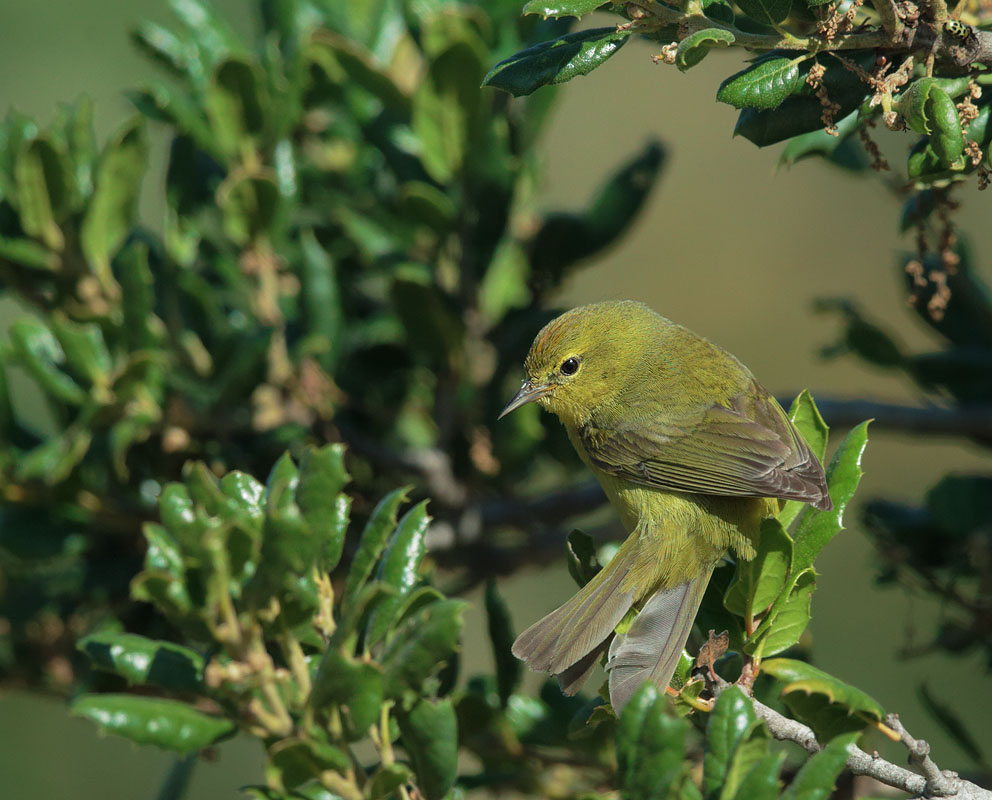
This male was singing persistently, and the photo is the only one I have that shows a bit of the orange crown that gives the species its common English name. The solid olive-green upperparts go with brighter yellow underparts such as are seen on the two birds pictured above.
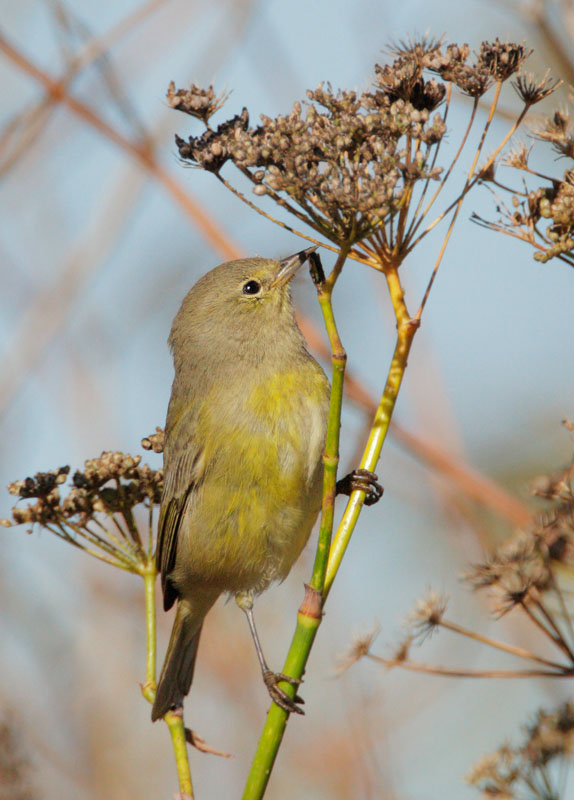
The interior west orestera subspecies, duller in hue than lutescens, is regular but
uncommon in the Bay Area in migration; the still-duller eastern celata is much
less likely. In general, females and immatures are duller than males, basic plumage
is duller than alternate, and birds are duller as they nest further east. So the dullest
Orange-crowned Warbler is a fall immature female celata, the brightest a spring adult
male lutescens. Shades vary in brightness from gray through olive-green to bright yellow.
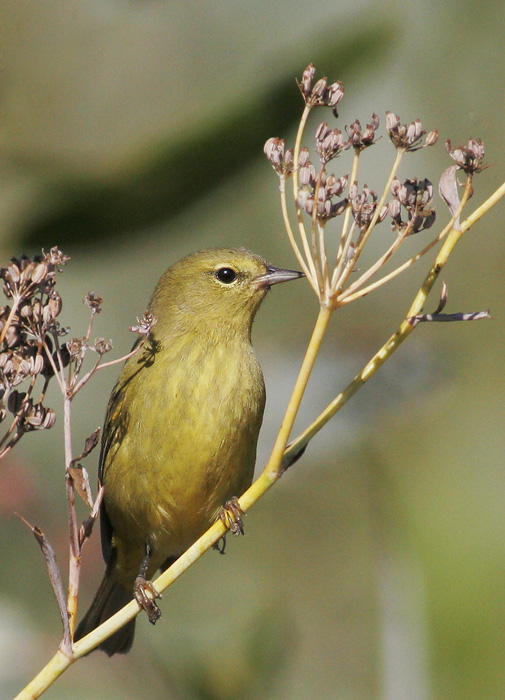
I suspect this Bay Area bird in fall, with a dull yellow-olive rather than
a solid gray head, is a drab lutescens rather than an adult/male orestera.
I believe the bird in the two pictures below, photographed in South Texas
in early spring, is an orestera, the predominant subspecies found there.