Lazuli
Bunting, Passerina amoena
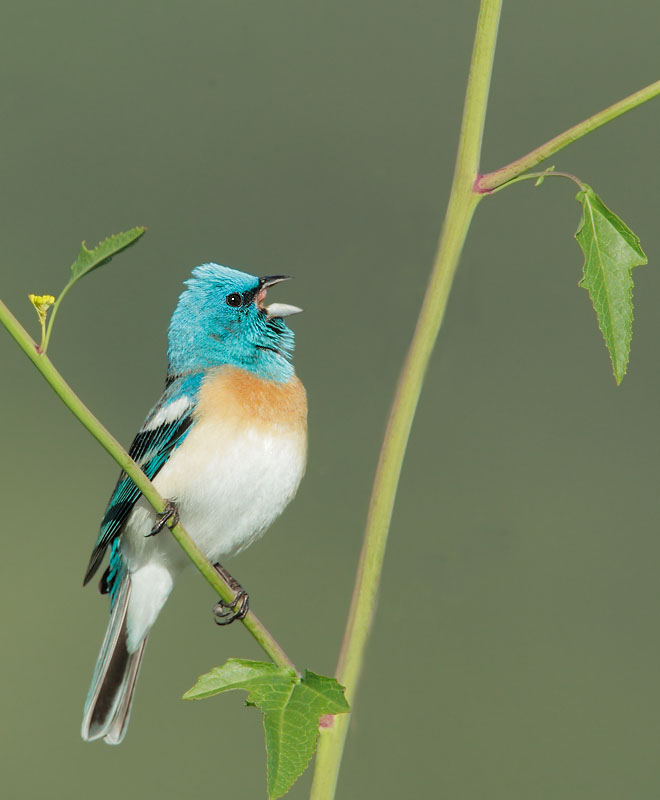
The spectacular male Lazuli Bunting in breeding plumage; compare its eastern Passerina
cousin the Indigo Bunting, which is a rarity in the San Francisco Bay Area.



An adult female in full breeding appearance in late June.
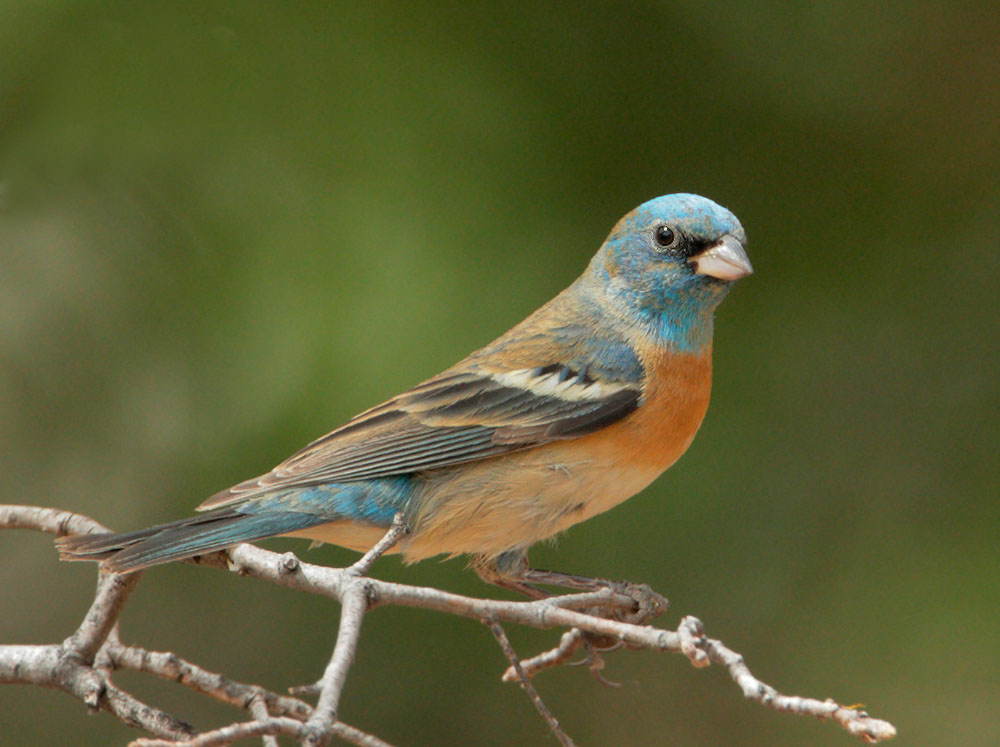
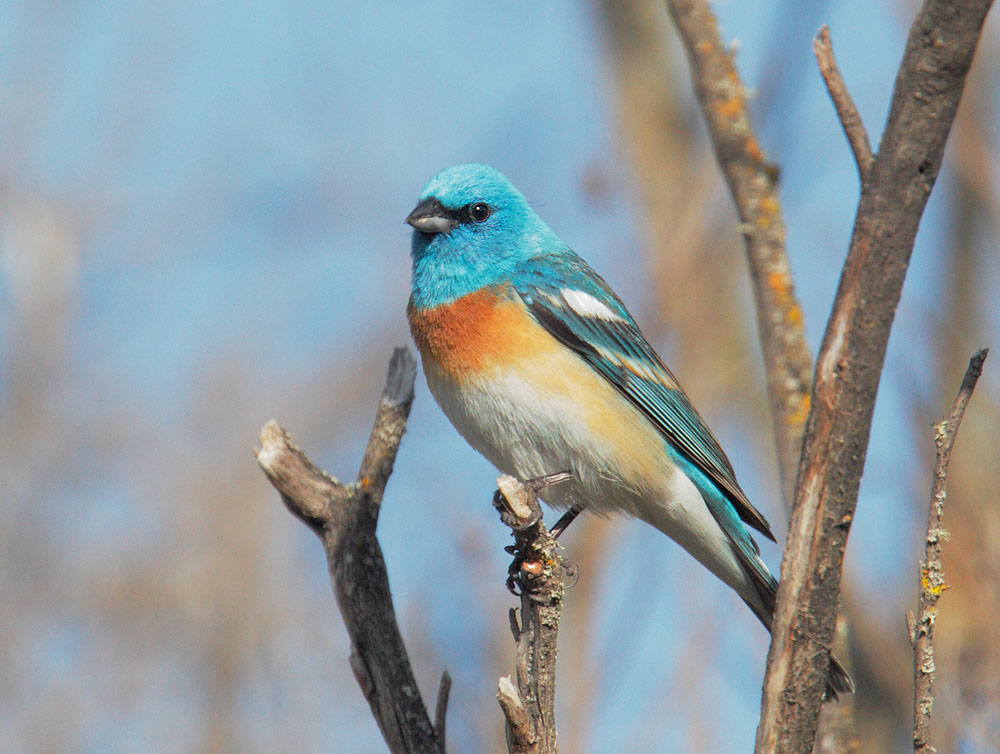
The glorious colors of breeding male Lazuli Buntings are attained mostly by wear rather than molt; the exception is the replacement of some dull blue feathers by bright ones on limited areas of the head and throat. Otherwise, the vivid blues and reds are concealed by buff-brown tips during winter, and emerge as those tips wear off during late winter and spring. Some birds, like the ones at the top of the page, are in full breeding array in April; others, like the ones above and below, are well along by then; and the bird two down still has a long way to go in mid-May. First year birds are more likely than full adults to have the mixed blue and brown feathering in spring.


This bird, with very limited blue and red feathering, is almost certainly
in its first spring.

A juvenile Lazuli in July of its hatch year.